

Quick answer
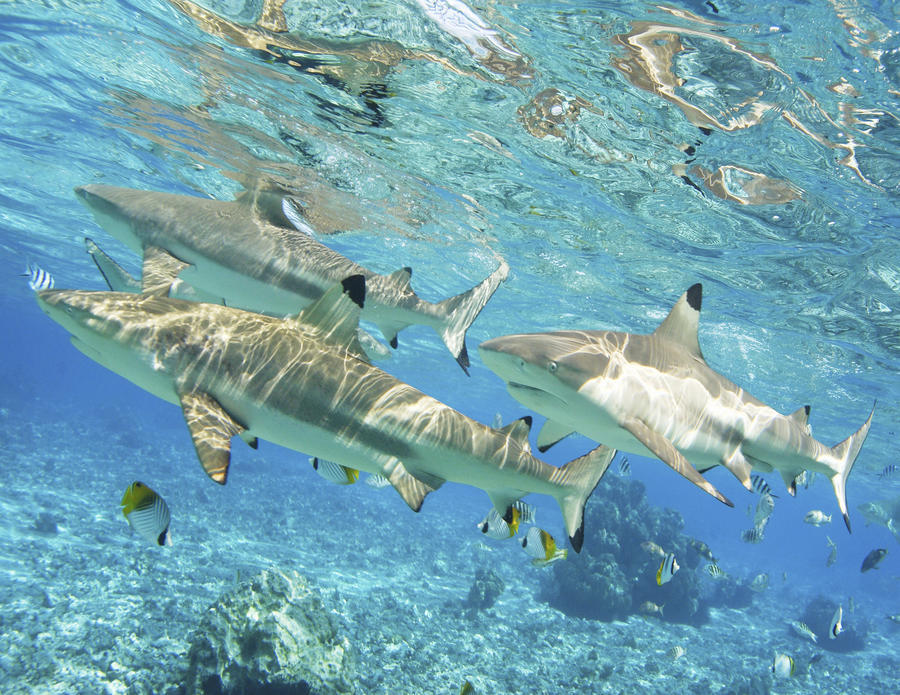
Yes, sharks inhabit Tahiti's lagoons year-round, primarily blacktip reef sharks and occasional lemon sharks in shallow coral zones. These species are non-aggressive toward humans and incidents remain statistically negligible across French Polynesia's dive sites. Tahiti Lagoon's monitored swim areas maintain separation from primary shark feeding grounds, and lifeguards track movement patterns daily during the 09:00–16:00 optimal swim window.
Blacktip reef sharks patrol the coral shelves bordering Tahiti Lagoon's designated snorkeling zones throughout the year, drawn by the reef's dense population of parrotfish and juvenile grouper. These meter-long predators hunt in water less than three meters deep, often visible from the surface as dark silhouettes gliding along the sand channels that separate coral heads. Their presence reflects lagoon health rather than hazard—French Polynesia's shark populations have remained stable since marine protection laws took effect in 2006, and behavioral studies confirm that blacktips avoid human contact when unprovoked. The question of whether sharks pose risk in Tahiti pivots on species identification and context. Blacktip reef sharks, the most common lagoon resident, feed on small reef fish and rarely approach swimmers beyond curiosity passes. Lemon sharks, slightly larger and less frequent, occupy deeper channels near the barrier reef but venture inward during high tide. Neither species exhibits the open-ocean hunting behavior associated with aggressive encounters. Tahiti Lagoon's swim boundaries place snorkelers in zones where shark density remains low and sightings predictable, with most concentrated activity occurring along the outer reef drop-off beyond the 200-meter buoy line. Visitors snorkeling between April and October encounter the calmest water and highest visibility, conditions that also draw sharks closer to shore as baitfish schools migrate through the passes. Morning sessions before 11:00 yield the clearest views of both coral formations and marine life, including the occasional shark cruising the periphery. The lagoon's shallow topography—averaging 1.5 meters inside the swim zone—allows constant visual contact with the bottom, eliminating the disorientation that complicates offshore encounters. Lifeguard stations positioned at 100-meter intervals monitor both swimmer activity and shark movement, issuing advisories when larger individuals enter the designated area. Local protocol emphasizes observation over avoidance. Snorkelers who spot a shark should maintain steady movement rather than thrashing or retreating rapidly, as erratic motion triggers investigative behavior. The reef sharks common to Punaauia waters interpret calm, horizontal swimming as non-threatening and typically veer away within seconds. Feeding or attracting sharks remains prohibited across all French Polynesian lagoons, a regulation enforced to preserve natural behavior patterns and minimize conditioning. The 6,000 XPF day pass at Tahiti Lagoon includes access to briefing materials that detail shark identification and response protocols, resources designed to convert uncertainty into informed coexistence with one of the Pacific's signature marine species.
“Blacktip reef sharks interpret calm, horizontal swimming as non-threatening and typically veer away within seconds.”
Wildlife and Marine Life: Are There Sharks in Tahiti?
The lagoons of French Polynesia are home to various marine species, including several types of sharks that are commonly observed by snorkelers. These encounters are a standard part of the local ecosystem.
Blacktip reef sharks are frequent visitors
These sharks, identified by the black tips on their fins, are commonly found in the shallow waters of the lagoon and generally avoid human interaction.
Lemon sharks reach significant sizes
Known for their yellow-tinted skin, these sharks can grow up to 3 meters in length and are often seen cruising the sandy bottoms of the reef.
Reef sharks serve as indicators of health
The presence of shark populations in the lagoon indicates a balanced marine ecosystem, as they occupy the role of apex predators within the reef structure.
Sharks are native to Polynesian waters
French Polynesia provides a protected environment for various shark species, which have inhabited these lagoons for centuries.
Snorkelers often observe shark behavior
It is common to see these animals swimming near the reef or resting in deeper channels, provided observers maintain a respectful distance and calm demeanor.
Marine biology dictates shark activity
Shark movements are often tied to tidal cycles and feeding patterns, leading to more frequent sightings in specific areas of the lagoon.
Guidelines for Safely Encountering Sharks in Tahiti
Snorkeling in Tahiti's lagoon requires respect for marine life and awareness of your surroundings. Follow these guidelines to ensure safe encounters while protecting the reef ecosystem.
Do
- Maintain calm, steady movements in the water
- Keep a respectful distance from all marine animals
- Snorkel with a buddy and stay within designated areas
- Report any unusual animal behavior to resort staff
- Wear reef-safe sunscreen to protect coral health
- Exit the water slowly if wildlife approaches closely
Don't
- Don't chase, corner, or attempt to touch sharks
- Don't feed any marine animals in the lagoon
- Don't wear shiny jewelry that may attract curious fish
- Don't snorkel alone or outside marked boundaries
- Don't make sudden splashing movements near wildlife
- Don't stand on or grab coral formations
Opening Hours for Visiting Tahiti Lagoon
Tahiti Lagoon maintains consistent operating hours throughout the week to provide access for guests. The facility remains open daily to accommodate visitors planning their snorkeling activities.
| Monday | 00:00–23:59 | |
|---|---|---|
| Tuesday | 00:00–23:59 | |
| Wednesday | 00:00–23:59 | |
| Thursday | 00:00–23:59 | |
| Friday | 00:00–23:59 | |
| Saturday | 00:00–23:59 | |
| Sunday | 00:00–23:59 |
When Is the Best Time to See Sharks in Tahiti?
The best arrival window is 09:00–16:00 to ensure optimal light for snorkeling and lagoon visibility before afternoon winds increase. Planning your visit within this period balances environmental clarity with the lagoon's typical daily weather patterns.
Dry Season (May–October)
Moderate crowds24°C–29°C; lower humidity levels.
This period offers the most stable conditions and reduced rainfall for water activities.
Wet Season (November–April)
Higher crowds25°C–30°C; periodic tropical showers.
Expect warmer water temperatures, though afternoon rain showers are more frequent.
Weekday Mornings
Low crowd density—
Arriving early provides the calmest water conditions before mid-day shifts in wind.
Verdict: The optimal time to visit is during the dry season from May to October, specifically arriving during the best arrival window of 09:00–16:00.
Check availability
Frequently Asked Questions About Sharks in Tahiti Lagoon
Everything you need to know about are there sharks in tahiti